
What This Theory Claims
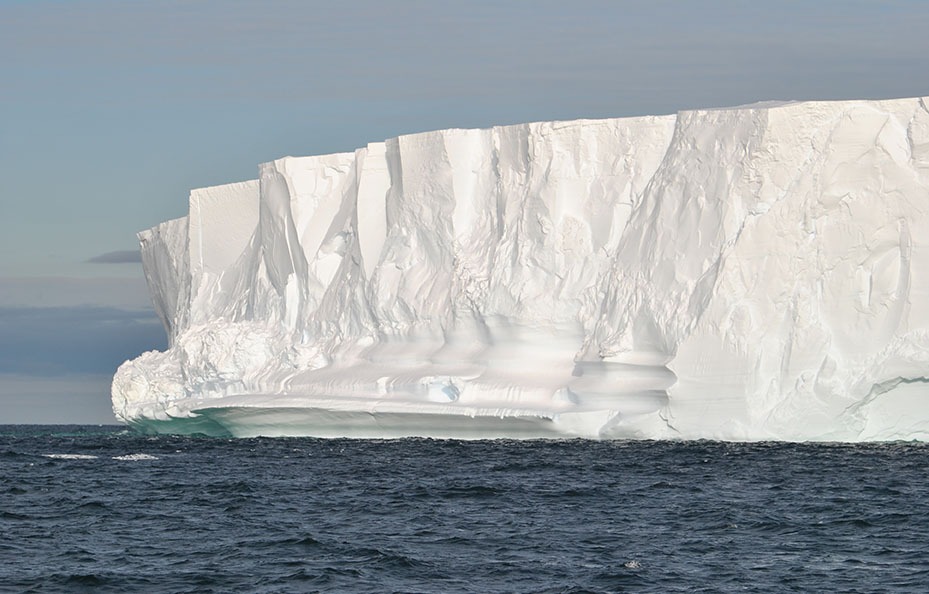
- The flat-earth ice-wall theory proposes that Antarctica is not a continent at the bottom of a globe but a towering wall of ice encircling a flat, disc-shaped Earth, with a solid dome (the “firmament”) arching overhead to contain the atmosphere.
- The modern version of this claim traces to Samuel Birley Rowbotham, an English writer who published Zetetic Astronomy: Earth Not a Globe under the pen name “Parallax” beginning in the 1840s, and the idea has been revived in the twenty-first century primarily through YouTube content creators and social media communities.
- Proponents cite the Bedford Level experiment, the apparent flatness of horizons, alleged restrictions on Antarctic travel under the 1959 Antarctic Treaty, and a literal reading of the Hebrew word raqia (“firmament”) in Genesis 1 as evidence for their model.
- The mainstream scientific consensus, established since at least the third century BC and confirmed by satellite imagery, GPS navigation, seismology, southern-hemisphere flight routes, and direct polar observation, holds that the Earth is an oblate spheroid with Antarctica as its southernmost continent.
- A December 2024 expedition called “The Final Experiment,” organized by a Christian pastor, took flat-earth content creators to Antarctica, where they livestreamed the 24-hour midnight sun and admitted it contradicted their model.
- The Catholic intellectual tradition has affirmed the spherical shape of the Earth since at least the Venerable Bede in the eighth century and Saint Thomas Aquinas in the thirteenth century, and the Church teaches that honest scientific inquiry cannot contradict faith (CCC 159).
The Origin of the Modern Flat Earth
Although scattered individuals throughout history have questioned the shape of the planet, the modern flat-earth movement has a specific and traceable origin. In 1838, Samuel Birley Rowbotham waded into the Old Bedford River in the English Fenlands, set up a telescope at water level, and watched a boat recede into the distance. He claimed he could still see the boat’s hull at six miles, which he argued would be impossible if the water curved according to the dimensions of a globe. He published his findings under the pen name “Parallax,” and over the following decades expanded them into a book-length treatise, Zetetic Astronomy: Earth Not a Globe, which went through multiple editions. Rowbotham proposed that the Earth is a flat disc centered on the North Pole, with the Sun, Moon, and stars moving in circles above it at relatively close range, and with Antarctica forming a continuous barrier of ice around the outer rim.
The Bedford Level experiment was revisited in 1870, when the naturalist Alfred Russel Wallace accepted a wager from flat-earth advocate John Hampden. Wallace repeated the observation with improved controls, including a fixed target marker at a known height. His results demonstrated curvature consistent with a globe, taking atmospheric refraction into account. An independent referee ruled in Wallace’s favor. Despite this, Hampden refused to accept the outcome and harassed Wallace for years. The episode established a pattern that the flat-earth movement has repeated ever since: proposing a test, receiving a result that contradicts the claim, and rejecting the result on procedural or conspiratorial grounds.
The Antarctic Treaty Conspiracy
A central pillar of the modern ice-wall theory is the claim that the 1959 Antarctic Treaty exists to prevent ordinary people from visiting Antarctica and discovering the truth. Proponents argue that the treaty makes independent exploration illegal and that governments enforce a military perimeter around the ice wall to maintain the deception. This claim does not survive contact with the treaty’s actual text, which is publicly available from the Antarctic Treaty Secretariat.
The treaty designates Antarctica as a zone for peaceful scientific research and prohibits military activity and nuclear testing. It does not prohibit private travel. More than seventy permanent research stations operate on the continent, staffed by scientists and support personnel from approximately thirty countries. During the 2023 to 2024 season, nearly 125,000 tourists visited Antarctica, arriving primarily on cruise ships departing from Ushuaia in Argentina, Punta Arenas in Chile, and other southern ports. Commercial expedition companies advertise Antarctic voyages openly, and passengers include photographers, adventurers, birdwatchers, and retirees. The notion that Antarctica is sealed off from public access is contradicted by a tourism industry that has grown more than tenfold in three decades.
The Final Experiment
The most dramatic refutation of the ice-wall theory in recent years came not from a university laboratory but from within the flat-earth community itself. In December 2024, Will Duffy, a Christian pastor from Wheat Ridge, Colorado, organized an expedition called “The Final Experiment.” After three years of planning, Duffy brought together four flat-earth content creators and four “globe earthers” at Union Glacier Camp in West Antarctica, at approximately 79 degrees south latitude. The cost was roughly $35,000 per participant.
The purpose was to observe the midnight sun. On the flat-earth model, in which Antarctica is the outer rim of a disc, the Sun circles above the Northern Hemisphere and can never remain continuously visible from such a southerly position for a full 24-hour cycle. On the globe model, the tilt of the Earth’s axis during the southern summer places the Sun above the horizon continuously at high southern latitudes. The expedition members livestreamed the sky via Starlink for several days. The Sun did not set.
Jeran Campanella, one of the most prominent flat-earth YouTubers under the name “Jeranism,” acknowledged on camera that his model was no longer valid and told The Denver Post that he intended to step away from the flat-earth community. Fellow participant Austin Whitsitt admitted he was wrong about the midnight sun, though he suggested there might be some way to reconcile the observation with a flat-earth framework. The broader flat-earth community rejected the results. Some claimed the footage was filmed in a dome studio. Others suggested the expedition members had been paid off. An Alabama pastor proposed that Satan had created a false fireball to deceive the observers. No flat-earth leader has yet offered a coherent alternative explanation for the continuous Antarctic sun that does not invoke conspiracy or the supernatural.
What the Globe Model Predicts and What We Observe
The evidence that the Earth is an oblate spheroid is not a single dramatic proof but an accumulation of observations so vast and so mutually reinforcing that no alternative model has ever accounted for all of them simultaneously. A Catholic science teacher might begin with the simplest observations and build outward.
Ships disappearing hull-first over the horizon is a phenomenon anyone can verify with a telescope from a shoreline. It was noted by Aristotle and remains observable today. The circular shadow the Earth casts on the Moon during every lunar eclipse is consistent with a sphere and inconsistent with any flat shape, which would cast an elongated or irregular shadow depending on the angle. The existence of different star patterns visible from the Northern and Southern Hemispheres, including the fact that Polaris is invisible south of the equator while the Southern Cross is invisible from high northern latitudes, requires a curved surface.
Southern-hemisphere flight routes present a particularly stubborn problem for the flat-earth map, which is typically based on the azimuthal equidistant projection centered on the North Pole. On that projection, continents in the Southern Hemisphere are stretched enormously in the east-west direction, and the distances between them become impossibly large. A direct flight from Sydney to Santiago, Chile, takes approximately 13 hours. On the flat-earth map, the distance between these two cities would require an aircraft to travel at speeds far exceeding the capability of any commercial airliner. The flight exists, operates daily, and arrives on schedule. It does so because the actual distance between Sydney and Santiago on a globe is roughly 11,300 kilometers, well within the range of a modern widebody aircraft.
The Dome and the Firmament
Many flat-earth believers ground their convictions in a particular reading of Scripture, especially Genesis 1:6 to 8, in which God creates the raqia (firmament) to separate the waters above from the waters below. As discussed at length in earlier articles on this site, the Hebrew word raqia derives from a root meaning “to beat out” or “to spread,” and the Septuagint rendered it as stereoma (something solid). Ancient Israelite cosmology almost certainly envisioned a solid dome over the Earth, because that was the common understanding throughout the ancient Near East.
The critical question, however, is not what the ancient audience imagined but what the sacred author intended to teach. The Catholic Church has addressed this question with considerable clarity. Pope Leo XIII, in Providentissimus Deus (1893), explained that the sacred writers “did not seek to penetrate the secrets of nature, but rather described and dealt with things in more or less figurative language, or in terms which were commonly used at the time.” The Second Vatican Council’s Dei Verbum (1965) instructs readers to attend to “the literary forms” of Scripture and to discern what the human authors “really intended, and what God wanted to manifest by means of their words.” The Catechism teaches that Scripture must be read “according to the literary genres” used by the sacred authors (CCC 110) and that the creation accounts in Genesis convey theological truths about God’s relationship to the world, not a scientific description of its physical structure (CCC 289).
Saint Augustine warned in the fifth century against using Scripture to make scientific claims that educated non-Christians could recognize as absurd, noting that such behavior brought the faith into disrepute. The Venerable Bede, writing in the eighth century, explicitly described the Earth as a sphere. Saint Thomas Aquinas accepted the spherical Earth without controversy in the thirteenth century and used its shape as an example in his philosophical arguments. The claim that the Bible teaches a flat Earth under a solid dome represents a failure of biblical interpretation, not a recovery of lost truth.
Eratosthenes and the Ancient Evidence
The spherical shape of the Earth was not a modern discovery imposed by NASA or any government. It was established by Greek scholars in the third century before Christ. Around 240 BC, Eratosthenes of Cyrene, the chief librarian at Alexandria, used a deceptively simple method to calculate the Earth’s circumference. He knew that at noon on the summer solstice, the Sun illuminated the bottom of a deep well in Syene (modern Aswan) without casting any shadow, meaning it was directly overhead. At the same moment in Alexandria, roughly 500 miles to the north, a vertical stick cast a measurable shadow. By measuring the shadow’s angle (approximately 7.2 degrees, or one-fiftieth of a full circle), Eratosthenes calculated the full circumference as fifty times the distance between the two cities. His result was approximately 25,000 miles, remarkably close to the modern measurement of 24,901 miles.
This calculation works only if the Earth is curved and the Sun is very far away. On a flat Earth with a nearby, small Sun, the shadow angles between two cities would not correspond to a consistent circumference, and different pairs of cities at different latitudes would produce wildly different results. They do not. The consistency of shadow angles measured at different latitudes around the world confirms the spherical model with a precision that Eratosthenes could not have anticipated.
Satellites, GPS, and the View from Above
Modern technology has made the shape of the Earth directly observable rather than merely calculable. The Global Positioning System relies on a constellation of satellites orbiting a spherical Earth. The mathematical models that allow GPS receivers to triangulate a position to within a few meters are built on spherical (technically, ellipsoidal) geometry. If the Earth were flat, the satellite positions, signal travel times, and coordinate calculations would fail catastrophically. GPS works for billions of users every day, on every continent including Antarctica, because the underlying model of a round, rotating Earth is correct.
Geostationary weather satellites such as GOES (operated by NOAA) and Himawari (operated by Japan) produce full-disc images of the Earth in real time. These are not composites or artistic renderings. They are continuous data streams showing weather systems rotating, day and night cycling across the surface, and the planet’s curvature visible from a fixed orbital position roughly 35,786 kilometers above the equator. The International Space Station broadcasts live video of the Earth below, and thousands of photographs taken by astronauts from dozens of countries show a sphere. Flat-earth proponents dismiss all of these images as fabrications, which requires every space agency in the world (including those of rival geopolitical powers such as the United States, Russia, China, India, Japan, and the European Union) to participate in a coordinated deception spanning decades, with not a single credible whistleblower ever emerging.
Why This Theory Attracts Believers
Understanding the appeal of the flat-earth ice-wall theory requires moving beyond evidence and into psychology. Research published in the journal New Media and Society and by the American Psychological Association has found that flat-earth belief correlates strongly with distrust of institutional authority, a preference for intuitive over analytical thinking, and heavy consumption of social media content, particularly on YouTube. The BBC and multiple academic studies have documented how YouTube’s recommendation algorithm historically steered users who watched one flat-earth video toward increasingly extreme content, creating a feedback loop that could move a curious viewer from casual interest to firm conviction in a matter of weeks.
A 2018 YouGov poll found that approximately four percent of Americans expressed belief in a flat Earth, with higher rates among younger respondents. A 2022 survey by the Carsey School of Public Policy at the University of New Hampshire placed the figure at roughly ten percent when including those who expressed uncertainty. These numbers are small in percentage terms but represent millions of people, and the movement’s online presence is disproportionately large relative to its actual size.
The theory also offers something that a physics textbook does not: a narrative of moral significance. In the flat-earth worldview, the shape of the planet is not a neutral scientific fact but the keystone of a vast deception designed to hide God, to diminish humanity’s importance, or to control populations. Accepting the flat Earth becomes an act of spiritual resistance, and rejecting it becomes complicity in evil. This moral framing makes the theory extraordinarily resistant to counter-evidence, because any evidence against it can be reinterpreted as further proof of the conspiracy’s reach.
The Catholic Intellectual Tradition and the Shape of the Earth
It is sometimes claimed that the Catholic Church once taught a flat Earth and that its acceptance of a globe is a modern capitulation to secular science. This claim is historically false. The myth that medieval Christians believed in a flat Earth was popularized in the nineteenth century, largely through Washington Irving’s fictional biography of Columbus and John William Draper’s polemical History of the Conflict Between Religion and Science (1874). Historian Jeffrey Burton Russell demonstrated in his 1991 book Inventing the Flat Earth that virtually every educated person in the Western world from the third century BC onward accepted that the Earth was spherical.
Catholic scholars were no exception. The Venerable Bede wrote in De Natura Rerum (circa 703 AD) that the Earth “is not merely circular like a shield, or spread out like a wheel, but resembles more a ball, being equally round in all directions.” Thomas Aquinas took the spherical Earth for granted in the Summa Theologica, using it as an example of how different sciences can examine the same truth from different perspectives. The medieval representations of Christ or Christian monarchs holding a globus cruciger (a cross-topped orb symbolizing dominion over the Earth) demonstrate that the spherical shape of the planet was assumed in the artistic and political iconography of Christendom for centuries before any satellite photograph was taken.
The Church’s consistent position is that faith and reason are complementary, not opposed. Fides et Ratio, the 1998 encyclical of Pope John Paul II, reaffirmed that human reason is capable of reaching genuine truth about the natural world and that this capacity is itself a gift from God. The Catechism states that “methodical research in all branches of knowledge, provided it is carried out in a truly scientific manner and does not override moral laws, can never conflict with the faith” (CCC 159). A Catholic who accepts the overwhelming evidence for a spherical Earth is not surrendering to secularism. A Catholic who accepts that evidence is thinking with the same tradition that produced Bede, Aquinas, Copernicus, and Georges Lemaitre.
What the Ice Teaches and What It Does Not
The flat-earth ice-wall theory does not survive examination from any direction. The Antarctic Treaty does not prohibit travel to Antarctica, and nearly 125,000 tourists visited the continent in the most recent season. The Bedford Level experiment, when properly controlled, confirmed curvature. The 24-hour midnight sun, livestreamed from Union Glacier by flat-earth believers themselves in December 2024, is impossible on any flat-earth map and exactly what the globe model predicts. Southern-hemisphere flight times are consistent with a sphere and nonsensical on a flat disc. Eratosthenes calculated the planet’s circumference with remarkable accuracy over two thousand years before the first satellite. GPS, weather satellites, and tens of thousands of orbital photographs confirm the shape of the Earth every second of every day. The notion that all of these observations, spanning millennia, cultures, and rival nations, are part of a single coordinated fraud is an extraordinary claim supported by no credible evidence whatsoever.
For the Catholic reader, there is a deeper lesson embedded in this discussion. The flat-earth movement sometimes presents itself as a defense of biblical faith against the arrogance of modern science. But the Catholic intellectual tradition has never pitted Scripture against observable reality. It has instead insisted, from Augustine to Leo XIII to the Second Vatican Council, that truth cannot contradict truth, that the sacred writers used the language and cosmology of their time to convey theological realities that transcend any particular model of the physical world, and that the honest pursuit of knowledge about creation is an act of reverence toward the Creator. Antarctica is a continent. The Earth is a sphere. The heavens declare the glory of God not because they conform to a particular ancient cosmological diagram, but because they are real, and the God who made them invites us to understand them as they actually are.
“It is he who sits above the circle of the earth, and its inhabitants are like grasshoppers; who stretches out the heavens like a curtain, and spreads them like a tent to dwell in.” (Isaiah 40:22)
Disclaimer: Amen4Jesus is an independent Catholic-inspired resource written by lay authors. Content is intended to inform, encourage, and support your faith life, not to serve as authoritative doctrinal instruction, professional advice, or official Church teaching. For definitive guidance, consult the Catechism of the Catholic Church, your parish priest, or your local bishop. Opinions expressed in commentary articles are the authors' own. Content examining controversial theories is for educational purposes only and does not imply endorsement. Contact us at editor@amen4jesus.com