
What This Theory Claims
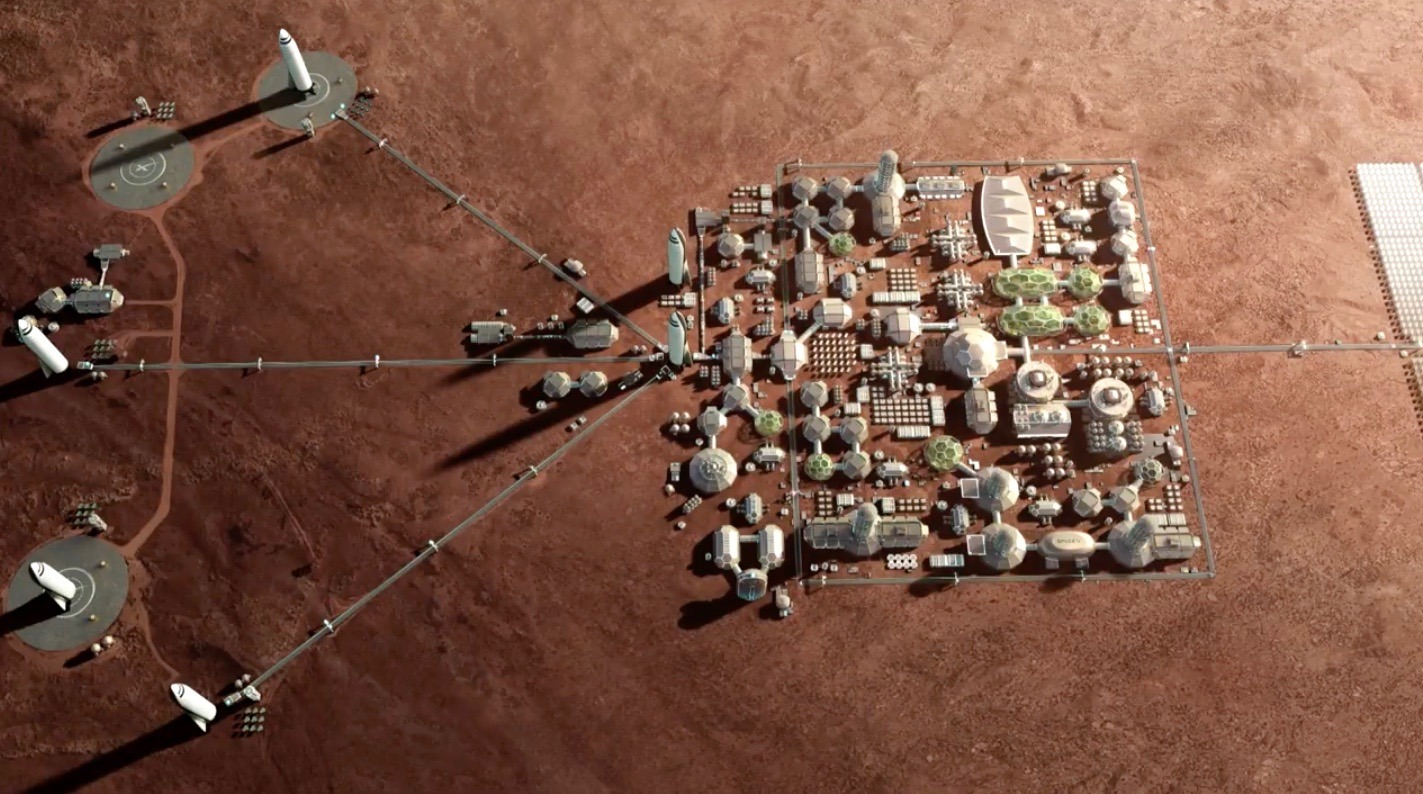
- Several self-described whistleblowers claim that the United States and other world powers have operated secret human colonies on Mars since at least the 1970s, using technology far beyond what is publicly known.
- The central evidence question is whether any physical, documentary, or independently verifiable proof exists for human presence on Mars — and to date, no such evidence has been produced by any proponent of the theory.
- Mainstream space science confirms that Mars has an atmosphere less than one percent the density of Earth’s, composed almost entirely of carbon dioxide, with surface temperatures averaging around minus sixty degrees Celsius — conditions that would kill an unprotected human in seconds.
- The Catholic Church has no teaching on secret space programs; however, the Vatican Observatory has affirmed that the possible existence of extraterrestrial life poses no conflict with Catholic faith, and the Church consistently upholds the compatibility of faith and rigorous scientific inquiry.
- The theory draws on a broader narrative called the “Secret Space Program,” popularized largely through online media and alternative television, and often incorporates claims of time travel, age regression, and memory erasure that have no basis in known physics.
- While the desire to believe humanity has already reached Mars speaks to a genuine sense of wonder about creation and a distrust of institutional secrecy, the theory as presented fails every standard test of evidence that serious inquiry demands.
The Origins of the Secret Mars Colony Idea
The notion that governments might be secretly colonizing Mars did not emerge from a laboratory or a leaked classified document. It emerged from a television hoax. In 1977, Anglia Television in the United Kingdom broadcast a mockumentary called Alternative 3, originally intended for April Fools’ Day. The program depicted a fictional conspiracy in which the American and Soviet governments, aware that Earth was becoming uninhabitable, had secretly begun colonizing Mars through a way station on the Moon. The broadcast ended with fabricated footage of a joint American-Soviet probe landing on Mars in 1962 and discovering life. The actors were credited at the end. The creators openly admitted it was fiction.
Yet Alternative 3 refused to die as fiction. A tie-in book published in 1978, marketed ambiguously as nonfiction, expanded the narrative and inserted bogus quotations attributed to real astronauts. According to the Washington Spectator, the modern “Secret Space Program” mythology “grew out of a 1970s spoof documentary televised in Britain called ‘Alternative 3’ meant as an April Fool’s joke … but then grew into a worldwide mythmaking cult.” The fertile soil of Cold War secrecy, genuine government classification programs, and public distrust of official narratives allowed the fictional seed to take root and grow into something its creators never intended.
What the Proponents Actually Claim
The contemporary Mars colony theory is not a single unified claim. It is a loose constellation of testimonies from individuals who say they have personally traveled to Mars, served in military operations there, or witnessed evidence of secret human settlements. The most prominent voices deserve individual attention, because the theory rises or falls on their credibility.
Andrew Basiago, a Washington state attorney, claims he participated as a child in a program he calls “Project Pegasus,” allegedly run by DARPA in the 1960s and 1970s. He asserts that this program developed teleportation and time travel technology based on the work of Nikola Tesla, and that he was physically transported to Mars on multiple occasions. In 2012, he further claimed that Barack Obama had traveled to Mars as a teenager through the same program — a claim that the White House flatly denied and that no independent source has corroborated.
Randy Cramer, who uses the alias “Captain Kaye,” claims he spent seventeen years serving in what he calls the “Mars Defense Force,” fighting indigenous insectoid and reptilian species on the Martian surface, followed by three years aboard a secret space fleet. He states that after his twenty-year tour, he was “age regressed” — his body returned to its younger state — and his memories were suppressed, only to resurface later.
Corey Goode became the most commercially successful proponent of the theory through the Gaia streaming platform’s program Cosmic Disclosure, which he co-hosted with David Wilcock beginning in 2015. Goode claims he was recruited into a “Secret Space Program” at age six, served for twenty years in various capacities including aboard spacecraft and on Mars, and was then age-regressed and returned to the point in time at which he had been recruited. Goode trademarked the terms “Secret Space Program” and “20 and Back.” His claims have been the subject of lawsuits, and in deposition testimony, material emerged that seriously undermined the factual basis of his public narrative. He has been described even within sympathetic communities as having admitted that portions of his account were “dream and delusion.”
Examining the Evidence
The most striking feature of the secret Mars colony theory is not the boldness of its claims but the complete absence of verifiable evidence supporting them. This is worth stating clearly, because the scale of what is being alleged would necessarily produce an enormous evidentiary footprint.
Consider what the theory requires. It requires launch vehicles capable of reaching Mars — vehicles that would be detectable by radar installations, amateur astronomers, and satellite tracking networks worldwide. Thousands of amateur radio operators and satellite trackers routinely monitor objects in Earth orbit and beyond. No amateur network has ever detected an unaccounted-for launch consistent with a crewed Mars mission. It requires a habitable infrastructure on Mars capable of supporting human life in an environment where the atmospheric pressure is roughly 0.6 percent of Earth’s, the air is 95 percent carbon dioxide, temperatures routinely drop below minus sixty degrees Celsius, and the surface is bombarded by cosmic and solar radiation due to Mars’s lack of a global magnetic field. Building such infrastructure would require supply chains of staggering complexity — none of which has left any detectable trace. It requires the cooperation and silence of tens of thousands of engineers, scientists, military personnel, contractors, and support staff across multiple decades and multiple nations. No credible defector with verifiable credentials has ever come forward.
The proponents’ evidence consists entirely of personal testimony. Not one photograph, document, artifact, radio transmission, engineering schematic, or piece of physical evidence has ever been produced. When pressed for corroboration, proponents typically invoke the very secrecy of the program as the reason no evidence exists — a circular argument that places the claim beyond the reach of verification or falsification. A claim that cannot in principle be tested is not a scientific claim. It is an article of faith.
The “20 and Back” mechanism — the assertion that participants are age-regressed and have their memories wiped before being returned to their original point in time — is particularly notable. If true, it would mean that the technology exists not only for interplanetary travel but also for time travel and the reversal of biological aging, two capacities that would represent the most consequential scientific achievements in human history. No proponent has explained why such technology would be used only for a secret military program and not, for instance, to cure disease, reverse aging in the general population, or solve any of the countless other problems it would render trivial. The mechanism also conveniently explains why no participant can produce physical evidence of their service — their bodies and memories have been reset. This is not evidence. It is an unfalsifiable escape hatch.
What We Actually Know About Mars
The scientific study of Mars is not a closed book controlled by secretive agencies. It is one of the most internationally collaborative and publicly documented endeavors in the history of science. As of this writing, multiple nations — the United States, the European Space Agency, India, China, and the United Arab Emirates — have successfully sent spacecraft to Mars. The data returned by these missions is extensively published, peer-reviewed, and available to researchers worldwide.
NASA’s Perseverance rover, which landed in Jezero Crater in February 2021, has been conducting detailed geological and atmospheric surveys. In September 2025, NASA announced that Perseverance had discovered a potential biosignature — a chemical pattern in rock that may indicate ancient microbial life. This is genuinely significant. But it is a far cry from a secret human colony. The potential biosignature is microscopic, embedded in rock billions of years old, and scientists were careful to emphasize that it had not yet met the threshold of proof for extraterrestrial life. The rigorous, transparent, and painstaking nature of this process stands in stark contrast to the secret colony narrative, where extraordinary claims are supported by nothing more than personal assertion.
The atmospheric and surface conditions on Mars are well characterized by decades of robotic exploration. A human being exposed to the Martian surface without a pressure suit would lose consciousness within about fifteen seconds due to the near-vacuum atmospheric pressure, and would die shortly thereafter. The notion that a functioning colony exists on Mars without detection by the dozens of orbiters and rovers that have mapped the planet’s surface in extraordinary detail is not consistent with the evidence.
The Faith Dimension
The secret Mars colony theory does not typically present itself in explicitly religious terms, but it intersects with questions that matter to Catholics: the scope of creation, the possibility of life beyond Earth, and the proper relationship between faith and evidence.
The Catholic Church has no dogmatic teaching on whether extraterrestrial life exists. The question is understood as a scientific one, not a theological one. Father José Funes, former director of the Vatican Observatory, stated in a 2008 interview that belief in the possibility of extraterrestrial life is fully compatible with Catholic faith, and that such beings could be considered part of God’s creation. Brother Guy Consolmagno, the current director of the Vatican Observatory, has written and spoken extensively on the same theme, emphasizing that the vastness of the universe reflects the creative power of God and that discovering life elsewhere would deepen rather than threaten our understanding of creation.
What the Catholic intellectual tradition does insist upon — and what is directly relevant here — is the unity of faith and reason. The Catechism affirms that “methodical research in all branches of knowledge, provided it is carried out in a truly scientific manner and does not override moral laws, can never conflict with the faith” (CCC 159). This means that Catholics are not called to accept claims simply because they are dramatic, or because they seem to affirm the grandeur of creation, or because rejecting them feels like siding with secular authorities. We are called to evaluate evidence honestly. A claim without evidence is not made holy by being extraordinary. The same intellectual tradition that produced Gregor Mendel, Georges Lemaître, and the Vatican Observatory expects us to ask hard questions and accept honest answers.
Why This Theory Appeals to People
It would be a mistake to dismiss the appeal of the secret Mars colony theory as mere gullibility. The people drawn to these claims are often responding to real experiences and legitimate concerns.
Distrust of government secrecy is not irrational. Governments have, in documented historical fact, conducted secret programs, lied to the public, and classified information for reasons that had more to do with institutional self-protection than genuine national security. The Manhattan Project, MKUltra, and decades of deception about surveillance programs are real. When someone says, “The government could be hiding something extraordinary,” they are not speaking from pure fantasy. They are extrapolating — sometimes too far — from a documented pattern. The error is not in distrusting institutions. The error is in concluding that because some secrets were real, any claimed secret must also be real.
There is also a deep and very human longing at work. The idea that humanity has already reached Mars, that we are more capable and more advanced than we know, that the cosmos is not as empty and indifferent as it sometimes appears — these are powerful hopes. For people who feel that the pace of official space exploration is frustratingly slow, or who sense that human potential is being squandered, the secret colony narrative offers a kind of consolation: we have already done it. We are already out there. The universe is already ours. This longing is not foolish. It is, in a certain light, a secular echo of the same impulse that drives the Christian hope for a creation fully redeemed and fully known. But longing, however noble, is not evidence.
How a Catholic Should Think About Extraordinary Claims
The secret Mars colony theory, evaluated against the available evidence, does not hold up. Its origins trace to an admitted television hoax. Its primary proponents have produced no verifiable evidence. Its central mechanisms — time travel, age regression, memory erasure — contradict known physics and are designed to be unfalsifiable. The massive logistical and technological infrastructure such colonies would require has left no detectable trace despite the scrutiny of international space agencies, independent astronomers, and satellite tracking networks. The scientific data from Mars itself, gathered by rovers and orbiters from multiple nations, shows a surface that is hostile to unprotected human life and bears no sign of human habitation.
None of this means that Mars is uninteresting, that space exploration is unimportant, or that the universe holds no surprises. The potential biosignature discovered by Perseverance is a reminder that genuine discovery is still happening — slowly, carefully, and through the disciplined application of reason to evidence. The Catholic tradition has always understood that truth is worth the patient work of finding it. Saint Paul’s counsel to the Thessalonians remains as practical as it is spiritual: “Test all things; hold fast what is good” (1 Thessalonians 5:21). The God who made Mars and the human mind that yearns to reach it does not ask us to abandon reason in pursuit of wonder. He asks us to use reason as the gift it is — and to trust that the truth, when we find it honestly, will be more extraordinary than any fiction.
Disclaimer: Amen4Jesus is an independent Catholic-inspired resource written by lay authors. Content is intended to inform, encourage, and support your faith life, not to serve as authoritative doctrinal instruction, professional advice, or official Church teaching. For definitive guidance, consult the Catechism of the Catholic Church, your parish priest, or your local bishop. Opinions expressed in commentary articles are the authors' own. Content examining controversial theories is for educational purposes only and does not imply endorsement. Contact us at editor@amen4jesus.com