
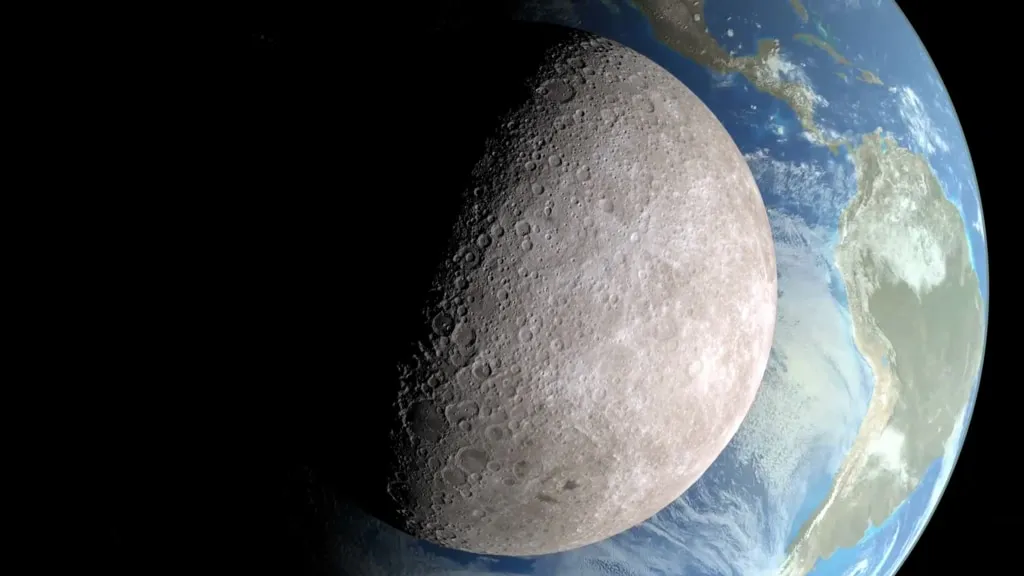
What This Theory Claims
- A persistent set of conspiracy theories alleges that NASA has faked some or all of its major space missions — most prominently the Apollo Moon landings — and that many of its published photographs are fabricated, digitally manipulated, or generated by computer.
- The central evidence questions are whether anomalies in Apollo-era photographs prove studio staging, whether NASA’s use of composite imaging constitutes deception, and whether recent missions like Artemis II are likewise fabricated — all of which mainstream science, photographic analysis, and independent verification have addressed in detail.
- Multiple independent parties — including the Soviet Union during the Cold War, amateur radio operators, astronomers worldwide, and space agencies from Japan, India, and China — have independently confirmed the reality of NASA’s missions, creating a verification record that no credible counter-explanation has addressed.
- The Catholic Church has no teaching on NASA’s missions specifically, but strongly affirms the compatibility of faith and reason, the legitimacy of scientific investigation, and the moral duty to pursue truth honestly — principles that bear directly on how a faithful Catholic should evaluate extraordinary claims.
- The theory gained major public traction through Bill Kaysing’s 1976 self-published book We Never Went to the Moon and surged again after a 2001 Fox Television special; it has resurged in April 2026 following the Artemis II lunar flyby, with social media users claiming the mission was filmed on a green screen.
- Surveys suggest that roughly six to eleven percent of Americans express some belief that the Moon landings were faked, with higher rates among younger adults, raising serious questions about how scientific literacy and institutional trust intersect in the digital age.
Where This Theory Began
The idea that NASA fabricates its missions is not as old as the space program itself. For the first several years after Apollo 11, the Moon landings were broadly accepted as fact — celebrated, debated in their political significance, but not widely questioned as events. That changed in 1976, when a former technical writer named Bill Kaysing self-published a pamphlet titled We Never Went to the Moon: America’s Thirty Billion Dollar Swindle. Kaysing had worked for Rocketdyne, a company that built rocket engines for the Saturn V, but he was not an engineer and had left the company in 1963 — six years before the first Moon landing. His pamphlet argued that NASA lacked the technical capability to land men on the Moon, that the photographs contained telltale evidence of studio staging, and that the entire program was an elaborate fraud designed to win the Cold War.
Kaysing’s claims remained relatively marginal for decades. They found new life in 2001, when the Fox television network aired a prime-time special called Conspiracy Theory: Did We Land on the Moon?, which presented many of the same photographic arguments to an audience estimated at fifteen million viewers. The program treated debunked claims as open questions and gave little airtime to rebuttals. It is widely credited by researchers with reviving Moon landing skepticism for a new generation.
The theory has continued to evolve. In the age of social media, the claims have expanded beyond the Apollo program to encompass virtually everything NASA publishes: photographs from the Hubble Space Telescope, images from the James Webb Space Telescope, pictures of Earth from orbit, and most recently, the Artemis II crewed lunar flyby that took place in early April 2026. Within hours of Artemis II’s historic pass around the Moon — in which the crew set a new record for human distance from Earth at 252,756 miles — social media accounts were circulating claims that the mission was filmed on a green screen, sharing AI-generated images purporting to show a staging, and flagging a broadcast graphics error during a CNN live stream as supposed proof of digital manipulation.
The Photographic Arguments and Why They Fail
The backbone of the “NASA is fake” theory has always been photographic analysis. Proponents scrutinize images from the Apollo missions and claim to find anomalies that prove the photographs were taken in a studio. The specific arguments have been remarkably consistent for fifty years, and each one has been thoroughly addressed by photographers, physicists, and imaging specialists. It is worth examining the most common claims on their merits.
The first and most frequently cited claim is that the Apollo photographs show no stars in the lunar sky. Since the Moon has no atmosphere, the argument goes, stars should be brilliantly visible, and their absence proves the photos were taken on a soundstage where projecting a convincing starfield would have been too difficult. The explanation is straightforward and has to do with basic photography. The lunar surface in daylight is intensely bright — astronauts were photographing sunlit landscapes. The camera exposure settings required to correctly capture a brightly lit astronaut on a sunlit surface are far too short and the aperture far too narrow to also capture the faint light of distant stars. Any photographer who has tried to photograph stars while standing in a well-lit area understands this principle. It is not an anomaly. It is how cameras work.
The second common claim involves shadows. Proponents note that shadows in some Apollo photographs do not appear perfectly parallel, and argue that this indicates multiple artificial light sources — as one would find in a studio — rather than the single light source of the Sun. On a perfectly flat plane with a single distant light source, shadows would indeed be parallel. But the lunar surface is not flat. It is covered in craters, ridges, slopes, and undulations. On uneven terrain, shadows cast by a single light source will appear to diverge or converge depending on the topography and the perspective of the camera. This effect is easily replicated on Earth using a single light source and uneven ground. The television show MythBusters demonstrated this in a widely viewed episode, and any number of photography textbooks explain the same principle.
A third argument concerns the appearance of the American flag, which appears to wave in some photographs despite the airless lunar environment. This is perhaps the simplest claim to address. The flag was designed with a horizontal rod along its top edge precisely because NASA engineers knew it would hang limp in the absence of wind. The apparent “waving” is the result of the flag being handled, unfolded, and adjusted by the astronauts; it retained the creases and motion imparted to it because there was no air resistance to dampen the movement. In the video footage, the flag moves only when being touched and is completely still at all other times.
The Composite Image Question
A more recent and in some ways more sophisticated line of argument concerns NASA’s acknowledged use of composite images. NASA has openly explained that many of its published photographs of Earth, deep space objects, and planetary surfaces are composites — images assembled from multiple exposures, often taken through different filters and at different wavelengths, then combined and color-processed to produce a single image. The James Webb Space Telescope, for example, captures data in infrared wavelengths invisible to the human eye. To produce the published images, scientists assign visible colors to different infrared bands, combine exposures from multiple detectors, and process the result into something human eyes can interpret. NASA documents this process publicly and makes raw data available to anyone who wants to examine or reprocess it.
Proponents of the fakery theory seize on the word “composite” and present it as an admission that the images are fabricated. This conflates two very different things. A composite photograph is assembled from real data — real photons captured by real instruments. The processing makes the data visible and interpretable, much as a doctor processes an MRI scan into a viewable image without anyone suggesting the MRI is fake. Fabrication would mean the data itself is invented — that there is nothing behind the image. NASA’s composites are transparent, reproducible, and verifiable. The raw data is archived and publicly accessible. Independent researchers, universities, and amateur astronomers routinely download and reprocess the same data, arriving at consistent results. This is the opposite of a cover-up.
The distinction matters because it reveals a pattern in how the theory operates. It takes a real and openly acknowledged aspect of how science works — image processing — and reframes it as evidence of dishonesty. This rhetorical move depends on the audience not understanding the process being described. Once the process is understood, the argument dissolves.
Independent Verification: The Evidence That Cannot Be Faked
Perhaps the most decisive argument against the NASA fakery theory is one that the theory’s proponents almost never address directly: the extensive independent verification of NASA’s missions by parties who had every reason and every capability to expose a hoax if one existed.
During the Apollo program, the Soviet Union — America’s direct adversary in the Space Race — tracked every Apollo mission using its own radar and intelligence-gathering infrastructure. The Soviet Space Transmissions Corps monitored the spacecraft trajectories, confirmed the communications, and verified the missions independently. The Soviet Union had invested billions of rubles in its own lunar program and would have gained an incalculable propaganda victory by exposing an American fraud. It never did so, because there was no fraud to expose. Instead, Soviet scientists privately acknowledged that the Americans had won the race, a fact the Soviet government publicly admitted in 1989.
Beyond the Soviets, independent tracking was conducted by observatories worldwide. The Bochum Observatory in Germany, directed by Professor Heinz Kaminski, independently confirmed Apollo mission data. Amateur radio operators picked up transmissions from the spacecraft. And in the decades since, multiple nations — Japan, India, and China — have sent their own lunar orbiters that have photographed the Apollo landing sites from orbit. NASA’s own Lunar Reconnaissance Orbiter, launched in 2009, has captured high-resolution images showing the descent stages of the lunar modules, the tracks left by astronauts’ boots, and the equipment deployed on the surface. These images have been confirmed by independent analysis.
Then there are the retroreflector arrays — panels of precisely engineered mirrors placed on the lunar surface by Apollo 11, Apollo 14, and Apollo 15 crews. For more than fifty years, observatories around the world have fired lasers at these reflectors and measured the return signal to calculate the Earth-Moon distance with extraordinary precision. These experiments are ongoing, reproducible, and conducted by institutions that have no connection to NASA.
The Artemis II mission of April 2026 adds yet another layer. The crew’s trajectory was tracked in real time by amateur astronomers, independent satellite tracking networks, and space agencies from multiple countries. The photographs transmitted from Orion — including the now-famous “Hello, World” image of Earth — were captured by onboard cameras and compared favorably with what the laws of orbital mechanics predicted the crew would see from that position. The conspiracy claims that emerged within hours — green screen allegations, AI-generated “evidence” of staging — were debunked within days by multiple independent fact-checking organizations, including BBC Verify and AFP Fact Check, which traced the viral “glitch” video to a television broadcast graphics overlay, not a flaw in the mission footage itself.
The Scale Problem
There is a practical argument against the fakery theory that deserves its own consideration, because it applies not just to Apollo but to every version of the claim. The Apollo program employed approximately 400,000 people across NASA and its contractor network, including over 20,000 industrial firms and universities. A successful deception of this scale would require that every one of these people — engineers, scientists, technicians, administrators, contractors, and their families — maintained perfect silence for more than fifty years. No deathbed confession. No leaked document. No disgruntled employee. No whistleblower. In the entire history of government secrecy, no operation involving more than a handful of people has remained secret for long. The Manhattan Project, which involved roughly 125,000 workers, was penetrated by Soviet spies almost from its inception. The idea that a program three times that size could sustain a perfect conspiracy across half a century, multiple presidential administrations, and thousands of retirements and deaths strains credulity far more than the straightforward explanation: they actually went.
This problem multiplies with each new mission the theory must account for. If Artemis II was also faked, the circle of conspirators must now include the current NASA workforce, SpaceX engineers, the European Space Agency, the Canadian Space Agency (which provided a crew member), amateur astronomers who tracked the spacecraft, and every media organization that covered the event. At some point, the conspiracy required to sustain the theory becomes far more extraordinary than the missions themselves.
What the Catholic Faith Says About Seeking Truth
The Catholic Church has not issued any formal statement about NASA, the Apollo program, or the authenticity of space photographs. These are scientific and historical questions, not matters of faith and morals. But the Church has spoken clearly and repeatedly about the principles that govern how a Catholic should approach such questions.
The Catechism teaches that “methodical research in all branches of knowledge, provided it is carried out in a truly scientific manner and does not override moral laws, can never conflict with the faith, because the things of the world and the things of faith derive from the same God” (CCC 159). The Church affirms that human reason is a gift from God, capable of knowing truth about the created world, and that the honest pursuit of scientific knowledge is not merely permitted but is a form of honoring the Creator. The Catholic intellectual tradition produced Gregor Mendel, the Augustinian friar who founded the science of genetics; Monsignor Georges Lemaître, the Belgian priest who first proposed what became known as the Big Bang theory; and the Vatican Observatory, which has operated continuously since 1891 and whose astronomers publish peer-reviewed research in mainstream scientific journals.
This tradition does not ask Catholics to accept scientific claims on blind authority. It asks us to follow evidence where it leads, to distinguish between what is demonstrated and what is assumed, and to hold both faith and reason in proper relation. A Catholic who examines the evidence for the Apollo landings — the independent Soviet tracking, the retroreflector experiments, the lunar orbiter photographs, the testimony of 400,000 workers, the Artemis II mission tracked in real time by the global community — is not being asked to trust NASA uncritically. That Catholic is being asked to weigh evidence honestly. And the evidence is overwhelming.
Why People Are Drawn to This Theory
The appeal of the NASA fakery theory is not difficult to understand, and dismissing its adherents as foolish would be both unkind and inaccurate. The theory draws strength from several sources that deserve honest acknowledgment.
The first is genuine institutional distrust. The United States government has, in documented fact, lied to its citizens on matters of great consequence — about weapons of mass destruction, about domestic surveillance, about secret medical experiments conducted on vulnerable populations. A person who has learned these facts and concluded that the government is capable of large-scale deception is not irrational. The error comes in the next step: concluding that because the government has lied about some things, it must be lying about everything, or that a demonstrated capacity for deception is the same as evidence of a specific deception. These are not the same thing, and conflating them is a reasoning error, not a character flaw.
The second is the alienating complexity of modern science. Space travel, orbital mechanics, and image processing involve concepts that most people encounter only superficially. When NASA explains that a photograph is a composite, a person without a background in imaging science may genuinely not understand the difference between processing real data and fabricating false data. The theory exploits this gap. It offers a simpler narrative — “they made it up” — that requires no technical knowledge to understand. Simplicity is appealing, but simplicity is not the same as truth.
The third, and perhaps deepest, is a desire for a world with clearer moral lines. Conspiracy theories often provide a narrative in which there are identifiable villains, a hidden truth waiting to be uncovered, and a community of clear-eyed people who see what others cannot. This narrative structure is satisfying in a way that the messier reality of institutional bureaucracy, incremental scientific progress, and ambiguous motives is not. It is worth noting that this desire for clarity and meaning is not wrong in itself — it is, in fact, a reflection of the human soul’s orientation toward truth. The Catholic tradition recognizes that the heart yearns for what is real. The question is whether we pursue what is real through patient, disciplined inquiry, or whether we settle for a compelling story that confirms what we already suspect.
Honest Inquiry and the Evidence Before Us
The claim that NASA fakes its space missions and photographs does not survive serious scrutiny. The photographic “anomalies” cited by proponents are explained by basic principles of photography and physics. The use of composite images is a standard, transparent, and publicly documented scientific practice, not evidence of fabrication. The Apollo missions were independently verified by the Soviet Union, by observatories across the globe, by amateur radio operators, and by retroreflector experiments that continue to this day. The landing sites have been photographed from lunar orbit by spacecraft from multiple nations. The recent Artemis II mission was tracked in real time by independent observers worldwide. And the sheer scale of the alleged conspiracy — requiring the perfect silence of hundreds of thousands of people across more than half a century — is far less plausible than the straightforward account that these missions occurred.
None of this means that NASA is above criticism, that governments never lie, or that healthy skepticism is unwelcome. A Catholic in particular should bring a rigorous and honest mind to every claim — including claims made by institutions of authority. But rigorous honesty demands that we evaluate evidence on its merits, distinguish between justified suspicion and unfounded accusation, and accept what the evidence clearly demonstrates even when a more dramatic alternative feels more satisfying. The same tradition that calls us to “test all things” also calls us to “hold fast what is good” (1 Thessalonians 5:21). The evidence for NASA’s missions is not a matter of faith. It is a matter of fact — tested, verified, and confirmed by the very methods of honest inquiry that the Catholic tradition has championed for centuries. When we see the photographs of Earth taken from beyond the Moon, what we are seeing is not a deception. It is creation, witnessed from a vantage point that previous generations could only imagine, and it is worthy of the same wonder and gratitude with which the Psalmist wrote: “The heavens declare the glory of God; the firmament proclaims the work of his hands” (Psalm 19:1).
Disclaimer: Amen4Jesus is an independent Catholic-inspired resource written by lay authors. Content is intended to inform, encourage, and support your faith life, not to serve as authoritative doctrinal instruction, professional advice, or official Church teaching. For definitive guidance, consult the Catechism of the Catholic Church, your parish priest, or your local bishop. Opinions expressed in commentary articles are the authors' own. Content examining controversial theories is for educational purposes only and does not imply endorsement. Contact us at editor@amen4jesus.com